Tax wealth not work.
We can stop growing wealth inequality.
We use cookies where necessary to allow us to understand how people interact with our website and content, so that we can continue to improve our service.
We only ever receive anonymous information, and cannot track you across other websites.
View our privacy policy
Gabriel Zucman is the most important economist in the world today. And the one billionaires fear most.
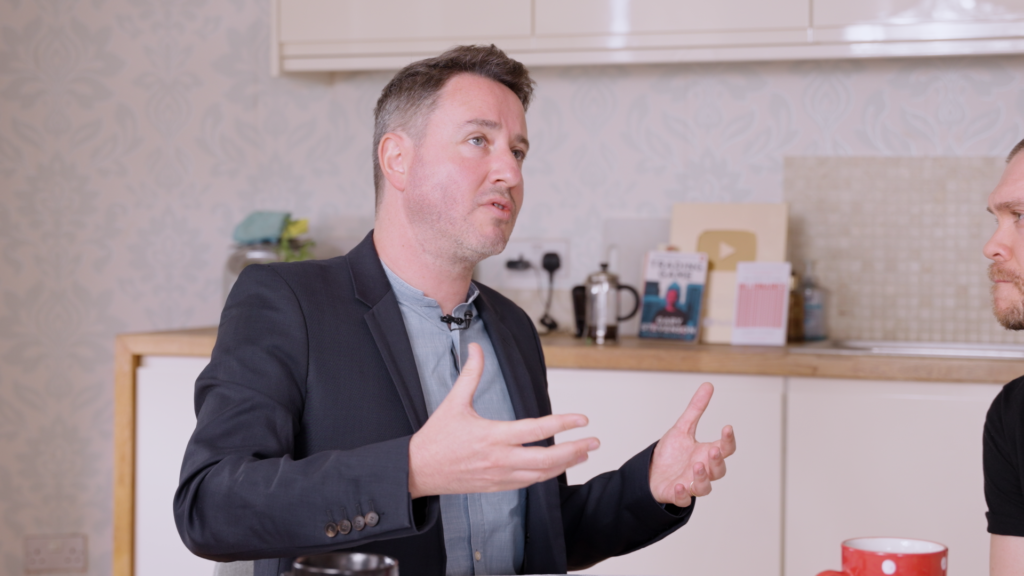
This is an AI-written (but human-edited) summary of Gary’s recent video: The economist billionaires fear: this is how we get a wealth tax
In his previous video on Rory Stewart, Gary promised that the response to accusations of fringe economics would not just be rhetoric, it would be evidence. He said he was reaching out to the most reputable economists in the world who share his analysis, and that the first to appear on the channel would be Gabriel Zucman.
Gary opens by contextualising his guest. Zucman is a professor at the Paris School of Economics and UC Berkeley, director of the EU Tax Observatory, and winner of the 2023 John Bates Clark Medal — the most prestigious prize in economics below the Nobel. His book We Need to Tax Billionaires is newly available in bookshops.
Gary is unambiguous about what this appearance means. Anyone who claims that no serious academic economist supports wealth taxes is now, demonstrably, wrong.
Zucman says that for most of the twentieth century, he explains, the data simply did not exist.
Measuring wealth distribution across an entire population requires combining tax records, survey data, and financial accounts in ways that only became feasible a decade or two ago. But he also acknowledges a more uncomfortable reason: the questions are politically inconvenient.
We can stop growing wealth inequality.
Researchers who conclude that wealth concentration requires redistribution tend to find fewer corporate donors and a less welcoming reception in certain institutions. The field has not been neutral.
Zucman sets out the scale of what is happening. Over four decades, the share of total wealth held by the very richest has grown dramatically across virtually every developed economy. The wealthy accumulate assets — property, equities, financial instruments — that compound automatically. Everyone else depends on wages, which have stagnated in real terms for a generation. The divergence is structural and self-reinforcing.
His proposed solution is a 2% annual minimum tax on wealth above 100 million euros — applying to roughly 3,000 families worldwide.
The reason this is necessary is that billionaires currently pay an effective tax rate of around 0.2% of their wealth, far below what teachers or nurses pay, by legally deferring income through holding companies and trusts. A wealth tax bypasses these structures entirely. Globally, it would raise around $250 billion per year.
The video’s most striking passage is Zucman’s account of France. His proposals have not merely been debated — they have passed the lower chamber of parliament.
The Socialists made a 2% wealth tax a condition of their budget support, and roughly 86% of French voters back it across party lines. A serious, technically specified wealth tax has gone from academic proposal to legislative reality in the world’s seventh-largest economy.
One of the sharpest moments in the video comes when Zucman inverts the standard framing. Wealth taxes are routinely described as an untested experiment.
Zucman argues the opposite: a tax system in which billionaires pay below the rate of working people, in which wealth compounds faster than wages can ever grow, is what is historically unprecedented.
A wealth tax is not radicalism. It is a return to something closer to the post-war norm — the same period, not coincidentally, when living standards rose fastest for ordinary people.
Gary raises the Rory Stewart episode directly. Zucman addresses himself to The Rest is Politics listeners: the claim that no serious academic economist supports wealth taxes is simply false. He, Piketty, and Saez are among the most cited economists of their generation.
None of them are fringe figures. The consensus Stewart invoked does not exist in the form he described it.
Zucman closes by widening the frame. Similar proposals are live across Europe, on the ballot in California, and on the G20 agenda. The economics, he argues, is settled. What happens next is a political question — and political questions are answered by organised people who refuse to be told that change is impossible.